Cultivating Curiosity in Our Youngest Members
Bender ECC Preschool
Bender ECC Preschool
Everything You Need To Know
- Bender ECC Preschool Core Hours: 8:00 AM – 4:00 PM
- Bender ECC Preschool After Care: 4:00 PM – 5:30 PM
| 10-Month Annual Tuition | 12-Month Annual Tuition | |
|---|---|---|
| Toddler program (12-24 months) | N/A | $27,900 |
| 2 Year Old Program | $22,710 | $27,252 |
| 3-Year-Old Program (3-4 years) | $21,120 | $25,344 |
| 4-Year-Old Program (4-5 years) | $21,330 | $25,596 |
After Care:
10-Month Annual Tuition: $2,750 ($275/month)
12-Month Annual Tuition: $3,330 ($275/month)
- Bender ECC Preschool 2026-2027 Parent Handbook
- Maryland State Department Of Education Office of Child Care Health Inventory
- Maryland State Department Of Education Office Of Child Care Emergency Form
- Maryland Department Of Health Immunization Certificate
- Maryland State Department of Education Office of Child Care Medication Administration Authorization Form
- Maryland Department Of Health Blood Lead Testing Certificate
Sibling Discount
Receive a 5% discount for your second child.
Pay-In-Full-Discount
Families who pay their full annual preschool tuition by July 25, 2026, for the 2026–2027 school year will receive a 2% discount on their total tuition.
Financial Aid
Bender ECC families must enroll their child in a Bender ECC program prior to applying for financial assistance.
Please include any information you feel is relevant that may not be reflected in the application in your personal statement. For example: Recent job change or loss, out-of-pocket medical expenses, medical conditions that may impact a parent’s ability to work, or caregiving needs for children or parents that impact your family situation.

Bender ECC Preschool Curriculum
A Nurturing Preschool Learning Community Rooted in Jewish Values
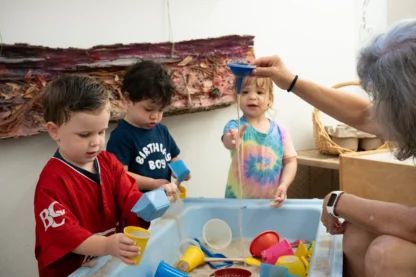
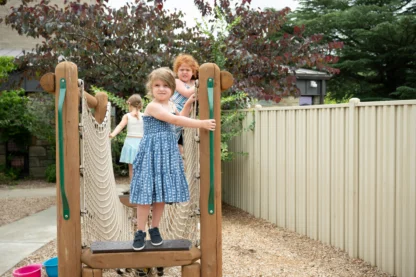
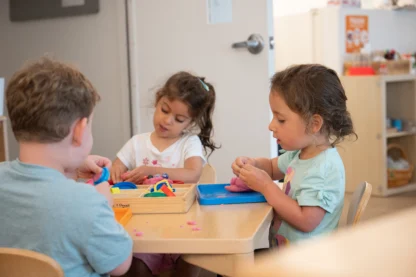
At the Bender Early Childhood Center, our programs are grounded in a play-based approach that respects each child’s developmental stage and fosters joyful learning. Guided by our Reggio Emilia-inspired philosophy, we view children as capable, creative partners in their own learning journey. Teachers observe closely, listen deeply, and collaborate with children to shape meaningful experiences.
Social–Emotional Development
- Build positive, trusting relationships with teachers
- Begin to express independence through simple choices
- Develop a sense of security through predictable routines
Language Development
- Strengthen receptive language by responding to familiar words, songs, and cues
- Practice expressive language through babbling, gestures, and emerging first words
- Engage in meaningful interactions through eye contact, pointing, and simple vocalizations
Cognitive Development
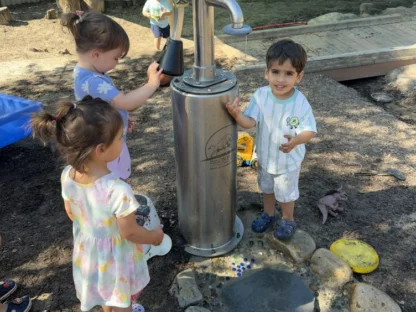
- Explore their environment with curiosity and sensory-rich materials
- Discover early cause-and-effect (e.g., shaking, dropping, splashing)
- Engage in simple problem-solving during play
Physical Development
- Build gross motor skills such as cruising and walking
- Practice coordinated movements through climbing, pushing, and pulling
Participate in multi-sensory exploration to strengthen body awareness
Social–Emotional Development
- Deepen relationships with peers and teachers through play
- Strengthen independence by practicing self-help skills and making choices
- Begin to navigate feelings with teacher support, developing empathy and cooperation
Language Development
- Expand expressive vocabulary through conversations, songs, and storytelling
- Use both verbal and non-verbal communication to share needs, ideas, and emotions
- Build receptive language by following simple directions and understanding routines
Cognitive Development
- Investigate more complex cause-and-effect through hands-on exploration
- Engage in early symbolic play and simple problem-solving
- Ask questions and explore topics of interest with growing curiosity
Physical Development
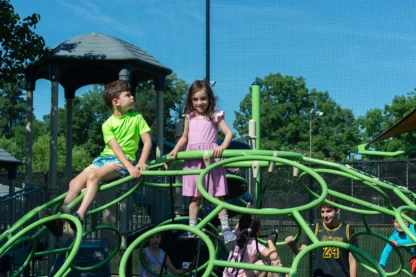
- Strengthen balance, coordination, and confidence in running, jumping, and climbing
- Develop fine and gross motor skills through purposeful movement and play
Participate in multi-sensory activities that support spatial awareness and motor planning
Social–Emotional Development
- Begin to identify and name basic feelings with teacher support
- Build confidence by trying new tasks and taking on classroom responsibilities
- Engage in cooperative play, learning to share materials and work with peers
Language & Literacy Development
- Grow receptive and expressive language through songs, conversations, and rich vocabulary exposure
- Express thoughts and needs using multi-word phrases and emerging storytelling
- Notice print in the environment (labels, signs, books, etc.) and begin to understand its purpose
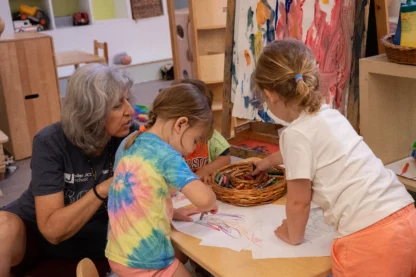
- Make early marks (scribbles, lines, shapes) to represent ideas and communicate meaning
Cognitive Development
- Strengthen flexible thinking by approaching tasks in new and playful ways
- Practice early problem-solving during hands-on exploration
- Show growing curiosity by asking simple questions and investigating how things work
- Engage in symbolic thinking through pretend play, storytelling, and imaginative scenarios
Physical Development
- Develop gross motor skills through running, climbing, jumping, and outdoor play
- Build fine motor strength through drawing, threading, manipulating tools, and sensory materials
Explore a variety of textures and materials to deepen multi-sensory understanding
Social–Emotional Development
- Identify and articulate a wide range of emotions, and begin to understand others’ perspectives
- Build confidence by taking leadership roles and tackling multi-step tasks
- Participate in collaborative play and group learning, forming meaningful peer relationships
Language & Literacy Development
- Use expressive language to share detailed thoughts, feelings, and stories
- Expand receptive language by following multi-step directions and engaging in group discussions
- Show increased appreciation for books, storytelling, and early literacy routines
- Create more intentional marks—letters, letter-like forms, and drawings—to convey ideas and begin early writing
Cognitive Development
- Demonstrate increasingly flexible and inventive thinking during complex, open-ended projects
- Apply problem-solving strategies more independently and reflect on outcomes
- Show sustained curiosity by asking deeper questions and exploring topics over time
- Use symbolic thinking to plan, negotiate roles, and express ideas through more elaborate imaginative play
Physical Development
- Refine gross motor skills through coordinated movement—hopping, balancing, climbing, and organized games
- Strengthen fine motor precision through drawing, writing tools, cutting, and self-help skills
- Participate in weekly group swim lessons throughout the school year.
- Integrate multi-sensory information to deepen understanding of space, body awareness, and the physical world
The Bender JCC Early Childhood Center embraces an inclusive approach that supports children, families, and educators. We collaborate with families and experienced early childhood support professionals to understand each child’s strengths and learning style.
Our teachers are supported by a highly experienced Leadership Team with backgrounds in child development, early childhood education, special education, family engagement, and inclusive practice. The team works closely with educators to create thoughtful and intentional classrooms, grounded in best practice.
Public and Private therapists, including speech, occupational, or physical therapists, can offer on-site support services to support continuity between home and school. We are committed to ensuring that every child is in a classroom that best supports their learning, development, and well-being.
Our goal is simple and steadfast: to offer a safe, nurturing, and inclusive preschool community where every child is known, celebrated, and supported on their unique learning journey.